


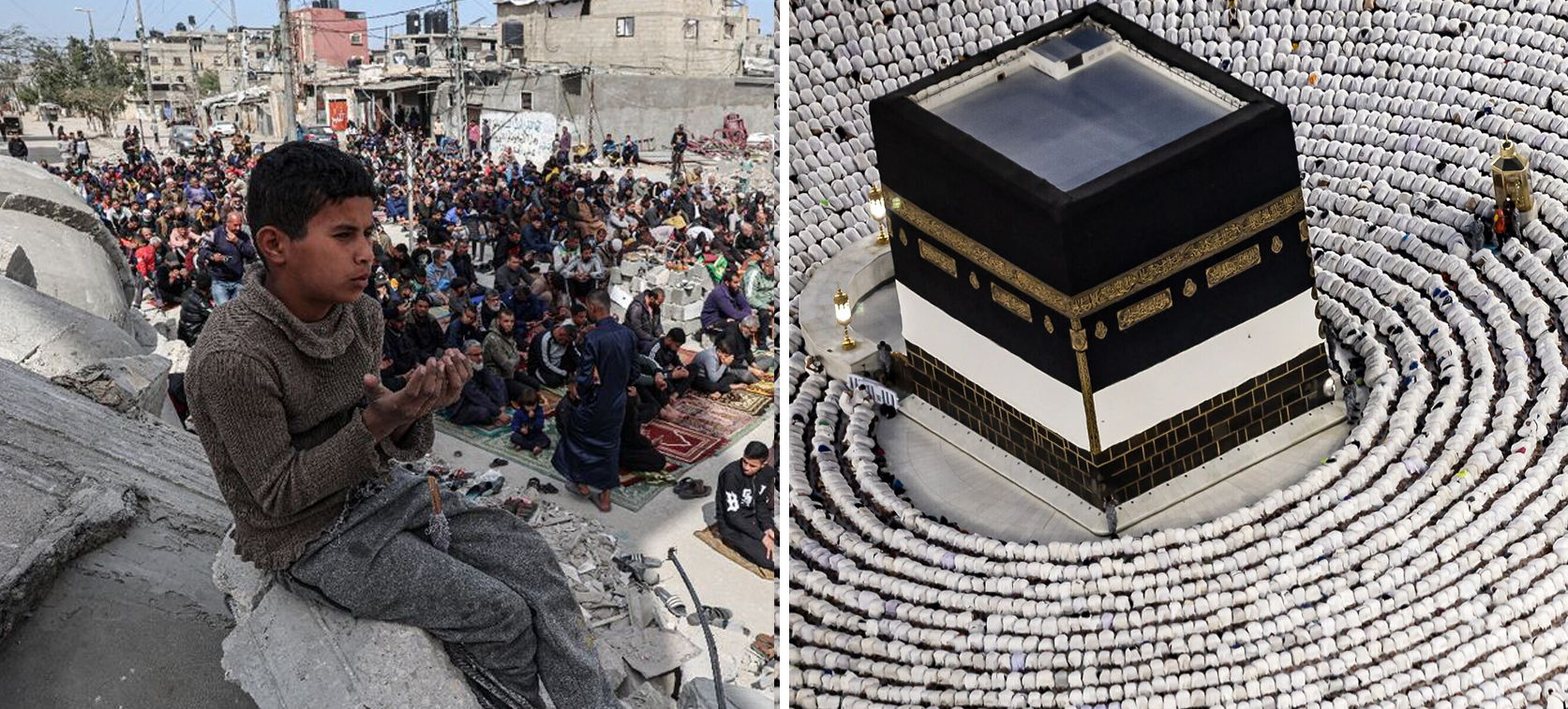
Every year millions walk between the hills of Safa and Marwa.
They walk with calmness, with prayer on their lips, with Zamzam flowing nearby, with lights above them and safety around them. The sa’i has become ritualised in comfort. Yet beneath the physical act lies a story soaked in desperation, panic, fear, and survival.
It was not a symbolic stroll for Hajar.
It was terror.
A mother alone in the desert.
No civilisation.
No protection.
No food.
No visible future.
Ibrahim عليه السلام had left her and her infant son Ismail in the barren valley by the command of Allah. When she asked him, “Did Allah command you to do this?” and he replied yes, she answered with certainty:
“Then Allah will not abandon us.”
But faith did not remove hunger.
Trust in Allah did not erase fear.
Tawakkul did not mean passivity.
When the water finally ran dry, the silence of the desert became unbearable. The lips of baby Ismail had begun to crack from thirst. His crying was no longer the ordinary cry of an infant wanting comfort — it was the cry of a child weakening under the desert sun.
Imagine Hajar looking down at her baby as the heat wrapped itself around the valley like fire.
No shade.
No caravan in sight.
No sound except the wind and the desperate cries of her child.
Every mother knows the panic of hearing her child cry in pain. But this was not a scraped knee or a passing fever. This was the fear of watching life slowly leave your child while your own hands are powerless to stop it.
Hajar could not bear to simply sit and watch Ismail die.
So she ran.
She climbed Safa with urgency, her feet striking the burning earth, her eyes scanning the horizon in desperation. Perhaps there would be travellers. Perhaps a well. Perhaps any sign of life.
Nothing.
Only endless desert.
She rushed back down again, her heart pounding harder with every step. As she reached the valley floor, Ismail disappeared from her sight behind the dip in the land. A mother separated visually from her crying child, even for moments, while panic consumed her.
Then she ran faster.
Not ceremonial movement.
Not ritualised walking.
A frantic mother driven by terror.
She climbed Marwa breathless, straining her eyes once more across the horizon. Still nothing.
No water.
No people.
No rescue.
Can you imagine the thoughts tearing through her mind?
Will my baby survive another hour?
Will his crying suddenly stop forever?
Will we die here unknown and forgotten beneath this endless sky?
Then she descended again.
Back and forth she ran seven times under the crushing weight of uncertainty. Every journey between Safa and Marwa carried the agony of hope rising and collapsing again. Yet she continued to move.
Because a mother’s love refuses surrender even when logic says there is no way out.
This was not comfort.
This was not ceremony.
This was survival.
And today, across the Muslim world, millions live the reality of Hajar every single day — except unlike Hajar, their suffering is not in an empty desert abandoned by civilisation.
Their suffering unfolds beneath governments, palaces, armies, borders, ministries, and rulers who preside over immense wealth while their populations search for bread beneath rubble.
The Ummah has its own Safa and Marwa.
In Gaza, mothers search through collapsed concrete for flour and water while drones circle above them.
In parts of Sudan, families flee hunger and war not knowing if food will come tomorrow.
Across refugee camps from Syria to Yemen, millions live with the daily anxiety that Hajar felt in the desert:
Where will my next meal come from?
The fear is real.
The panic is real.
The exhaustion is real.
But there is a profound difference between Hajar’s struggle and the suffering of much of the Ummah today.
Hajar’s hardship came under the command and wisdom of Allah.
The suffering of the Ummah today persists under corrupt systems, failed leaderships, colonial structures, and rulers who have normalised humiliation, dependency, and disparity between the rulers and the ruled.
Hajar was abandoned in a desert with no resources.
Yet many Muslim lands today possess oil, gas, minerals, fertile land, strategic trade routes, seas, rivers, and young populations — and still millions remain trapped in poverty while elites live in obscene luxury.
This is not scarcity.
This is political failure by design.
Allah eventually brought forth Zamzam beneath the feet of Ismail. But even in that miracle there is a lesson many overlook: Hajar still had to act.
In another powerful example, when Maryam عليها السلام suffered the pains of childbirth alone, Allah could have simply caused dates to fall from the tree without effort. Yet Allah commanded her:
“Shake the trunk of the palm tree toward you.”
A woman weakened by childbirth was told to shake a tree that she physically could barely move. Why?
Because Islam does not teach passive fatalism.
Trust in Allah is not surrender to oppression.
Faith is not an excuse for political paralysis.
Hajar ran.
Maryam shook the tree.
Action accompanied belief.
Today the Ummah does not need merely to dig for water or shake palm trees.
It must uproot the systems that keep entire populations trapped in humiliation while tiny elites rule on behalf of foreign interests and colonial power structures.
The Muslim world cannot continue with rulers living in palaces while children search rubbish piles for food.
It cannot continue with governments that silence every sincere call for change while preaching patience only to the oppressed.
It cannot continue with a reality where borders divide the Ummah, armies protect regimes more than people, and wealth circulates among the powerful while ordinary Muslims endure endless economic anxiety.
The lesson of Safa and Marwa is not simply movement.
It is struggle.
It is refusal to surrender.
It is the dignity of action in the face of desperation.
And perhaps this is why Allah made the story of one desperate mother part of the eternal rites of Hajj — so humanity would never forget that survival, dignity, and reliance upon Allah are tied together.
Hajar teaches the Ummah that even when the desert looks endless, believers move.
They strive.
They resist despair.
But the Ummah must also learn another lesson: suffering should never become normalised.
The cries from Gaza, the refugee camps, the famine zones, and the forgotten corners of the Muslim world are not simply humanitarian tragedies. They are indictments of a political order that has failed its people.
The real honouring of Hajar is not only to walk between Safa and Marwa once in a lifetime.
It is to build a world where no mother must live permanently in that panic again.
A world where rulers serve the people rather than foreign masters.
A world where wealth is distributed with justice.
A world where there is no vast gulf between palace and pavement, ruler and refugee, elite and orphan.
The Ummah still believes Allah provides.
But belief was never meant to produce passivity.
Hajar ran before Zamzam emerged.
And the Ummah too, must demand change so that relief arrives.
Need Help?
-
 [email protected]
-
 Follow us on Instagram
-
 Follow us on TikTok