


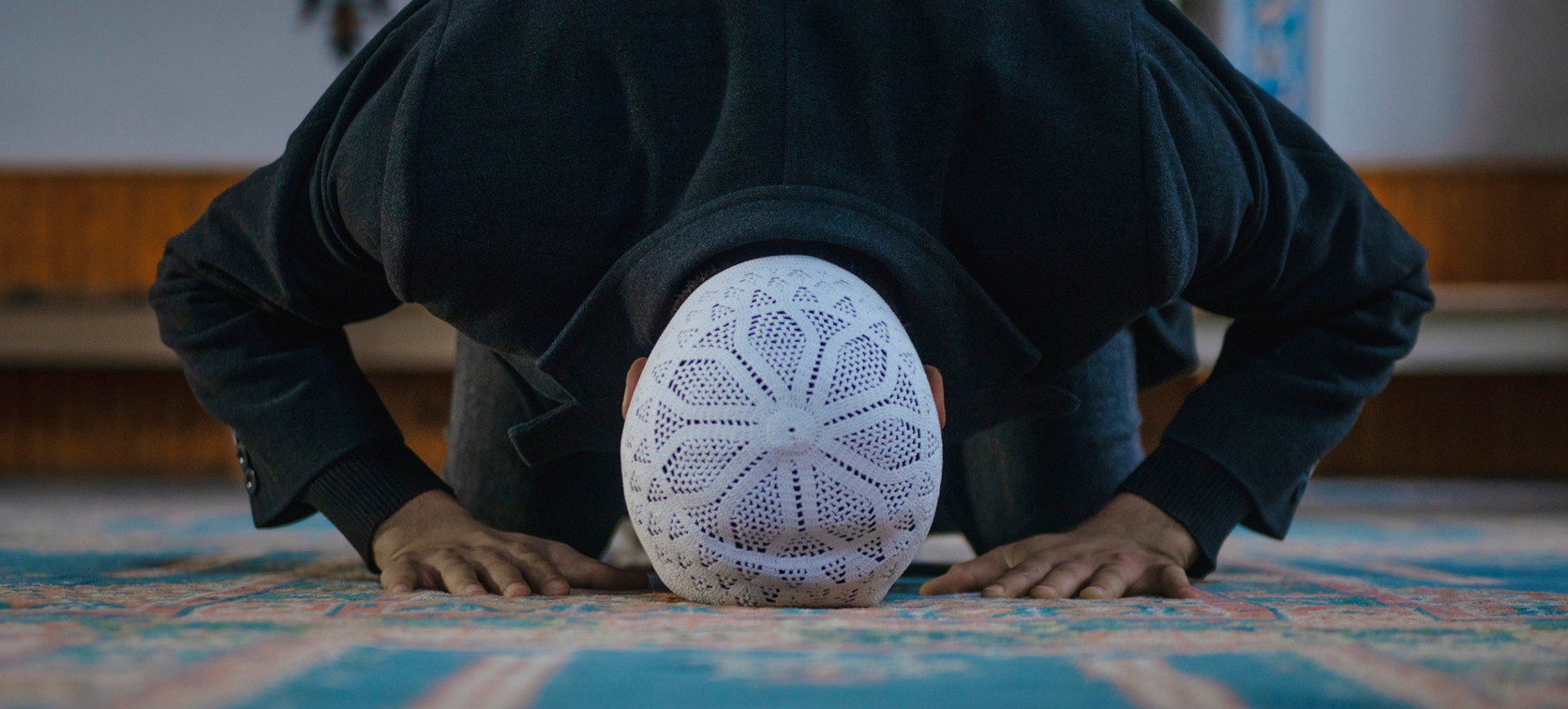
A Word That Changes Everything
There is a phrase that appears repeatedly throughout the Quran so frequently that it can begin to wash over us without truly landing. Aqimu al-Salah. Establish the prayer.
Not simply “pray.” Not “perform your prayers.” Establish them.
The Arabic root aqama carries a weight that the English word “establish” only partially captures. It means to erect something, to make it upright, to build it in a way that is visible, permanent and structural. You aqama a pillar. You aqama a building. It implies something that stands something others can see, something that organises the space around it, something that does not merely exist privately but shapes the environment it inhabits.
So when Allah commands the believers to aqimu al-salah, He is not simply asking them to perform a private ritual. He is asking them to erect something. To build something. The question this article sits with is: what exactly were the believers being asked to build?
Why This Command Came in Madinah
Here is where the scholarship of the Quran offers something extraordinary and it begins with a simple but profound observation about context.
The obligation of the five daily prayers was given in Makkah, during the Night Journey. The command to pray had already been received, already been practiced, already been lived by the early Muslim community through years of persecution and hardship. Prayer was not new to them.
And yet when the believers arrived in Madinah — when they established the first Muslim society, with its markets, its governance, its agriculture, its families and its alliances the command came again. Aqimu al-salah. Establish the prayer.
Classical scholars noted this distinction with care. In Makkah, the believers were a persecuted minority. They had no state, no economy, no collective social life to speak of. The command to pray was a command given to individuals trying to survive. But in Madinah, something entirely new existed: a community. A civilisation in formation. And it was into this context that Allah issued not a new command, but a deeper one. Not “pray” but establish prayer. Because now there was something to establish it within.
The command was not a repetition. It was an elevation.
Salah as the Rhythm of a Civilisation
To understand what this establishment looked like in practice, consider what the five prayers actually do to a day not spiritually, but structurally.
Salat al-Fajr arrives before dawn, before the world has stirred. The believer is called out of sleep, out of warmth, out of the most natural human comfort there is rest. The day has not yet begun, and already Allah interrupts it. Already the believer is reminded: your day does not begin with you. It begins with Allah.
Salat al-Dhuhr arrives at midday, at the very peak of the working day. The merchant mid-transaction, the farmer mid-harvest, the soldier mid-drill, the leader mid-deliberation all of them interrupted. Business stops. Productivity pauses. Not because the work is unimportant, but because something more important has called.
Salat al-Asr arrives in the mid-afternoon, as the day begins its descent. The work is almost done. The energy of the day is waning. And yet Allah interrupts again as if to say: the momentum of your day is not the master of your day. I am.
Salat al-Maghrib arrives at sunset, precisely when the working day closes and the domestic world opens. Families return home. Food is prepared. The warmth of the household begins to gather. And before the believer can fully settle into that comfort, the adhan calls. The transition from public life to private life is not entirely theirs to make. It passes through Allah.
Salat al-Isha arrives when the world has finally quietened —mwhen the noise of the day has receded and the believer reaches for rest. And even this, the ending of the day, the closing of consciousness, is not entirely theirs. They stand before Allah one final time before sleep takes them.
What emerges from this, when you look at it as a whole, is not a list of five prayer times. It is a map of an entire human day and Allah has placed Himself at every major threshold within it.
We wake. Allah. We enter the world. Allah. We become absorbed in work. Allah. We return to our families. Allah. We prepare to sleep. Allah.
This was not prayer sitting inside the Madinan way of life. This was prayer regulating it. Organising it. Giving it its rhythm. The adhan was not an interruption of civilisation it was civilisation’s heartbeat.
The Training of Submission
There is a thread running through each of these five moments that is worth naming explicitly: every single one of them interrupts something.
Fajr interrupts comfort. Dhuhr interrupts work. Asr interrupts productivity. Maghrib interrupts homecoming. Isha interrupts rest. None of the five prayers arrive at a neutral moment. Each arrives precisely when the believer is most naturally absorbed in something — and calls them away from it.
This is not incidental. It is the point.
The word Muslim means one who submits. And submission genuine submission cannot be practiced in the abstract. It must be practiced in the concrete, in the actual texture of daily life, at the exact moments when the pull of the world is strongest. The farmers, the merchants, the soldiers, the parents, the leaders of Madinah were not being called away from their roles. They were being trained, five times a day, in something that made all of those roles possible in the right way — the conscious acknowledgment that before any of those identities, they were slaves of Allah.
Salah, understood in this light, was not a spiritual exercise that sat alongside an otherwise secular life. It was the constant interruption that kept submission at the centre of everything. It was the recalibration five times a day, every day that prevented any single worldly identity from consuming the whole person.
The businessman was interrupted before business consumed him. The father was interrupted before family comfort consumed him. The leader was interrupted before power consumed him. And each time, the message of the interruption was the same: before all of these things, you are a slave of Allah.
What This Means For Us Today
The Madinan command was never rescinded. Aqimu al-salah remains in force. The command to establish prayer not merely to perform it still stands.
But if we are honest, many of us have quietly reduced prayer back to its Makkan form. A private act of worship, slotted into the gaps of a day whose rhythm is set by everything else by work schedules, by commutes, by family commitments, by the relentless pace of modern life. We pray when we can. We make up what we miss. And we wonder, perhaps, why the prayer feels disconnected from the rest of who we are.
The Madinan vision of salah was something different. It was prayer that organised the day, not prayer that fitted into it. It was a community whose collective rhythm whose very sense of time was structured around the adhan. The prayer was not an interruption of life. It was the architecture of it.
The question this asks of us is not whether we pray. It is whether our prayer is establishing anything. Is it shaping the rhythm of your day, or is your day shaping when you pray? Is it interrupting anything genuinely interrupting the thing that most threatens to consume you or has it been quietly domesticated into a routine that leaves everything else undisturbed?
The command was not perform the prayer. It was establish it. One word. But in that one word, Allah was asking for something far larger than a daily ritual. He was asking for a civilisation organised around submission. A life whose every major threshold was marked by standing before Him.
That invitation has not expired. It is extended to every believer, in every age, in every context — including ours.
Aqimu al-salah - Establish the prayer.