


A reflection for results day — for young people, and the people who love them
The Morning
There is a particular kind of silence on results day morning. The kind that sits heavily over breakfast tables, that fills car journeys to school, that lives in the space between a parent asking “are you okay?” and a teenager saying “yeah, fine.” Both knowing neither is entirely true.
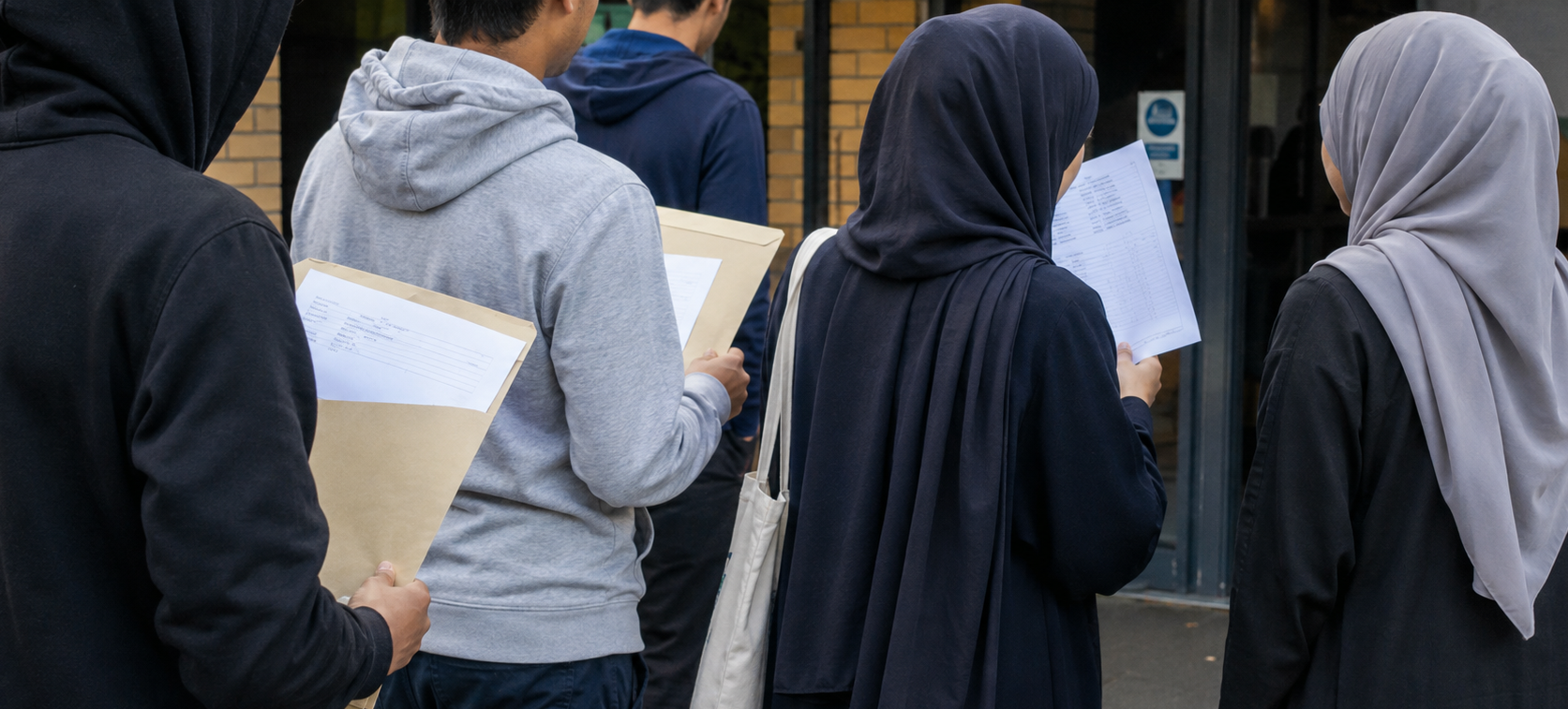
Today, across England, hundreds of thousands of young people will open an envelope or refresh a screen and feel, in that single moment, that they are being told something definitive about who they are and what their future holds. Some will feel relief. Some will feel pride. And some will feel a quiet devastation that they will not know how to name.
This article is for all of them. And for every parent, aunt, uncle, and grandparent sitting beside them.
What Society Has Decided Success Looks Like
Before we talk about grades, it is worth asking a question that rarely gets asked on results day: who decided that this was the measure?
The story most of us have been handed goes something like this. Work hard at school. Get good GCSEs. Progress to A-Levels. Go to university. Graduate. Get a good job. Build a stable life. This is presented not as one possible path but as the path and the conveyor belt of a successful life. And on results day, the grade on that piece of paper becomes a signal of whether you are on it or off it.
But this story has an author. It was written by a particular society, at a particular moment in history, with particular set of assumptions about what a human life is for. It was not handed down from the heavens. It was not always this way. And it is increasingly not working — even on its own terms.
The System That Was Supposed to Save You
Here is something worth saying plainly on a day when so much rides on a set of grades: the education system that produced those grades is, by almost any serious measure, not fit for purpose. This is not a radical opinion. It is increasingly the conclusion of economists, educators and employers alike.
A system designed in the 19th century to produce compliant workers for an industrial economy has never fully reinvented itself for the world it now claims to prepare young people for. It measures a narrow band of cognitive ability, primarily memory recall under timed pressure and then uses that measurement to sort human beings into categories of worth. It does not measure creativity, emotional intelligence, moral character, practical problem-solving, or the capacity to contribute meaningfully to a community. And yet these are precisely the qualities that drive economies, build institutions and change lives.
On pure economic terms, the very terms the system claims to serve, the evidence is damning. As the BBC reported this week, job vacancies across the UK have fallen to just 707,000 — the lowest level in over five years. The chief economist at the Institute of Chartered Accountants in England and Wales (ICAEW) warned that greater automation is squeezing entry-level roles, precisely the roles school leavers have traditionally stepped into. A 24-year-old graduate has applied for over 300 jobs and still cannot find one. A 19-year-old spent a year job hunting and has returned to college. These are not lazy or unambitious young people. These are young people who did exactly what the system told them to do and discovered that the promise was hollow.
So before a young person internalises today’s results as a verdict on their intelligence, their worth or their future, it is worth being honest about what those results actually measure. Not your potential. Not your character. Not your capacity to build something meaningful with your life. Just your performance, on a specific set of tasks, on specific days, within a system that was never fully designed with you in mind.
The Mental Health Reality
None of this makes the feeling of disappointment less real. And it would be dishonest to pretend otherwise.
The anxiety that precedes results day is not irrational. Young people are not overreacting. They have spent years being told by schools, by league tables, by university entry requirements, by the quiet pressure of parental expectation that these grades matter enormously. Of course they feel that they do. The system has gone to considerable lengths to make sure of it.
For some young people today, the result will confirm a fear they have been carrying for months that they are not clever enough, not good enough, not enough. That feeling is real and it deserves to be acknowledged, not dismissed. But it also deserves to be challenged. Because the fear is based on a definition of enough that was never theirs to begin with.
To every parent reading this: the instinct to fix it, to immediately pivot to solutions and options and next steps, is understandable. But today, before anything else, just listen. Your child does not need a plan in the next five minutes. They need to know that your love for them is not contingent on what that piece of paper says. That is more important than anything else you will say today.
Tie Your Camel
Islam does not offer false comfort. It does not say that effort is irrelevant, that outcomes don’t matter, or that everything will be fine regardless of what you do. Anyone who reduces the Islamic position to “don’t worry, it’s all written” has misunderstood it and done young people a disservice in the process.
The Prophet Muhammad ﷺ was once asked by a man whether he should tie his camel or simply trust in Allah. He replied: “Tie it, then put your trust in Allah” (Jamiʿ al-Tirmidhi, hadith 2517). That single exchange contains an entire philosophy of life. You are responsible for everything within your control. You are released from everything outside it. Both halves of that equation matter equally.
This means that if a young person sat their exams having genuinely prepared, having given their honest and full effort, having done everything within their power, then they have fulfilled their part. The outcome was never entirely in their hands. And standing before Allah, it is the effort, the intention and the character that are weighed, not the grade boundary.
But it equally means that Islam does not excuse complacency. Hard work is not optional. Excellence is encouraged. The Quran tells us: ‘Let every soul look to what it has put forward for tomorrow’ (Quran 59:18) Not what it has hoped for. Not what it has wished. What it has actually put forward. Islam demands that you show up fully and then trusts Allah with the rest.
What Success Actually Looks Like
The most impactful people in history were rarely the most decorated students. That is not an argument against studying hard it is an argument for widening the frame.
The Quran describes the human being not as a credential-holder, but as a steward — someone entrusted with a purpose that extends far beyond their exam results. The question a Muslim is ultimately asked is not what grade they achieved, but what they built, who they served, and what they left behind. The Prophet ﷺ said: ‘When a person dies, their deeds come to an end except for three: ongoing charity, knowledge that others benefit from, and a righteous child who prays for them.’ None of those three things require a grade 9.
Success, in its fullest sense, is not a destination you reach via a particular set of qualifications. It is a direction you choose, and keep choosing, across an entire lifetime. It is the parent who raises children with a sense of purpose. The professional who brings integrity into spaces where it is rare. The person who contributes to their community not for recognition but because they understand they are part of something larger than themselves. These things are available to every young person regardless of what their envelope said this morning.
To the Young Person Reading This
If today was a good day — congratulations, sincerely. Now ask yourself what you will do with what you have been given. Grades are not a destination. They are a resource. Use them well.
If today was hard — hear this clearly. This is not the verdict on your life. It is one data point in a very long story, produced by an imperfect system, on a particular set of days. The most important chapter of your life has not been written yet. And no exam board gets to write it for you.
The question that matters is not what grade you received this morning. It is what you will do with where you are. That question is open to everyone, equally, regardless of what that piece of paper says.
Tie your camel. Do the work. Then trust, genuinely trust Allah, that what is for you will not pass you by.
To the Parent Reading This
You have done more than you know. The hours, the encouragement, the quiet worry, the driving to revision sessions, the attempting to explain subjects you last studied decades ago, it matters. Your child saw it, even when they didn’t say so.
If today brought the news you hoped for, celebrate it together, and remind them that your pride in them began long before any result and will continue long after.
If it didn’t, resist the urge to immediately problem-solve. Sit with them first. Let them feel what they feel. And when the moment is right, remind them gently of something that is simply and permanently true: you are not defined by this. Not in our eyes. And not in God’s.
“Tie your camel, then put your trust in Allah.” — Prophet Muhammad ﷺ