


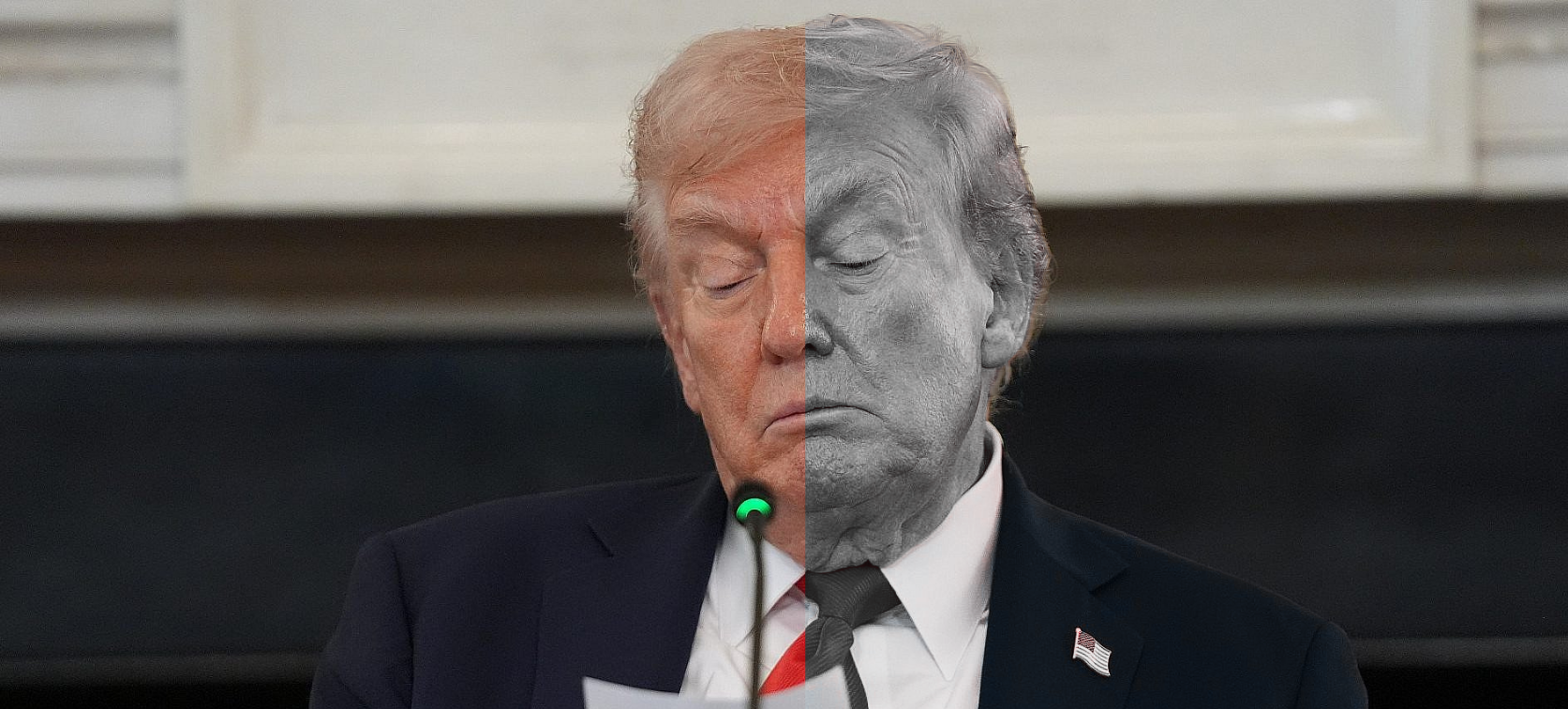
A Maverick — but Also a Mirror
When Donald Trump speaks of “the media”, of migrants “destroying our country”, or publicly belittles foreign leaders and entire communities, many view it as the outburst of a single, idiosyncratic man. But to do so is to mistake the symptom for the root cause. Trump matters — but he also reflects deeper, more structural changes in Western political culture.
His recent remarks about Somali immigrants, branding them “garbage” and urging their exclusion, are merely the most extreme example of a political style that has quietly but steadily grown in influence across democracies in Europe and North America. What appears outrageous is, in reality, the sharp edge of a much wider shift.
This is not about a man. It is about a political environment that made such a man possible — and, increasingly, replicable.
The Structural Crisis Behind the Outrage
There are profound structural disruptions that have unsettled Western democracies for decades. These disruptions — economic, social, political — have created the conditions in which figures like Trump can emerge not as anomalies but as expressions of a broader system in breakdown.
Political scientists Roger Eatwell and Matthew Goodwin famously describe this through a 4-D “perfect storm”:
- Destruction — rapid cultural and social change, often blamed on immigration or globalization.
- Deprivation — economic insecurity, unemployment, and the decline of traditional industries.
- Distrust — growing alienation from political elites, institutions, mainstream media and the traditional political class.
- De-alignment — the collapse of old patterns of ideological loyalty and party affiliation, leaving many voters politically “orphaned.”
The result has been the fragmentation and de-legitimisation of the moderate centre-left and centre-right — once the anchors of liberal democracy. In Europe, the term “Pasokification” captures the steep decline of social-democratic parties during this era.
As traditional parties struggled to address these anxieties — or even articulate them honestly — voters gravitated toward leaders promising blunt answers, identity-rooted belonging, and strong-man certainty.
What Makes Trump More Than Just Another Populist
It is tempting to see Trump as simply one populist among many. But he stands apart because he merges confrontational rhetoric, personal brazenness, and the institutional authority of the U.S. presidency. The damage is not only cultural; it is structural.
- Normalising Toxic Discourse: Verbal aggression and zero-sum culture-war framing have become common across Western democracies. Trump embodies, accelerates, and legitimises this hardening tone.
- Conflating Identity and Threat: By portraying migrants — or entire ethnic/religious groups — as existential dangers, political debate shifts from policy to identity conflict. In this frame, pluralism becomes a liability.
- Institutionalising Exclusion: Once such rhetoric comes from the head of state, it shapes policy, enforcement, and norms. What begins as language becomes architecture.
Trump is not merely another populist insurgent. He transforms a fringe political style into a governing model.
The Risk: From One Man to a Systemic Shift
If the focus remains solely on Trump, the diagnosis will be fundamentally flawed. The West risks misunderstanding a systemic crisis as a personality problem.
Political actors across the spectrum now tap into the same pool of grievances. Centrist parties shrink, mainstream institutions lose authority, and polarized identities supplant broad civic allegiance. Cultural and identity cleavages increasingly override the old economic left-right spectrum.
The danger is not Trump’s survival — it is his replicability.
From Symptom to Signal
Treating Trumpism as a personal pathology ignores what it reveals: that large segments of society feel insecure, unrepresented and abandoned. These fractures are not healing; they are deepening.
Western societies are failing to repair their structural fractures — economic, cultural, and institutional. And the longer they remain unresolved, the stronger the incentives become for political actors to exploit them.
Conclusion: A System Moving Toward Elite Rule — and Its Own Weakness
Condemning Trump is necessary. But stopping at condemnation is self-deception.
What is emerging across Western democracies is a shift toward a thinner, more exclusive form of governance — one in which a political, economic, and cultural elite consolidates authority while majorities grow more distrustful and alienated. This is not the strengthening of the West; it is the opposite. It is the emergence of a fragile order that rules by managing division, not resolving it.
And in such a system, replacing Trump will not end the crisis.
It will simply change the name of the person standing at the podium — while the deeper architecture of exclusion and elite consolidation remains firmly in place.
Yet this model is ultimately unsustainable. Systems built on fractured consent, widening inequality and brittle coalitions of elites do not endure. They appear powerful, but in reality they rest on eroding legitimacy and escalating public distrust. The political order that produced Trump is not stabilising — it is weakening. And unless those fractures are confronted directly, the West will face not a temporary disruption but a prolonged crisis of its own making.
Need Help?
-
 [email protected]
-
 Follow us on Instagram
-
 Follow us on TikTok