


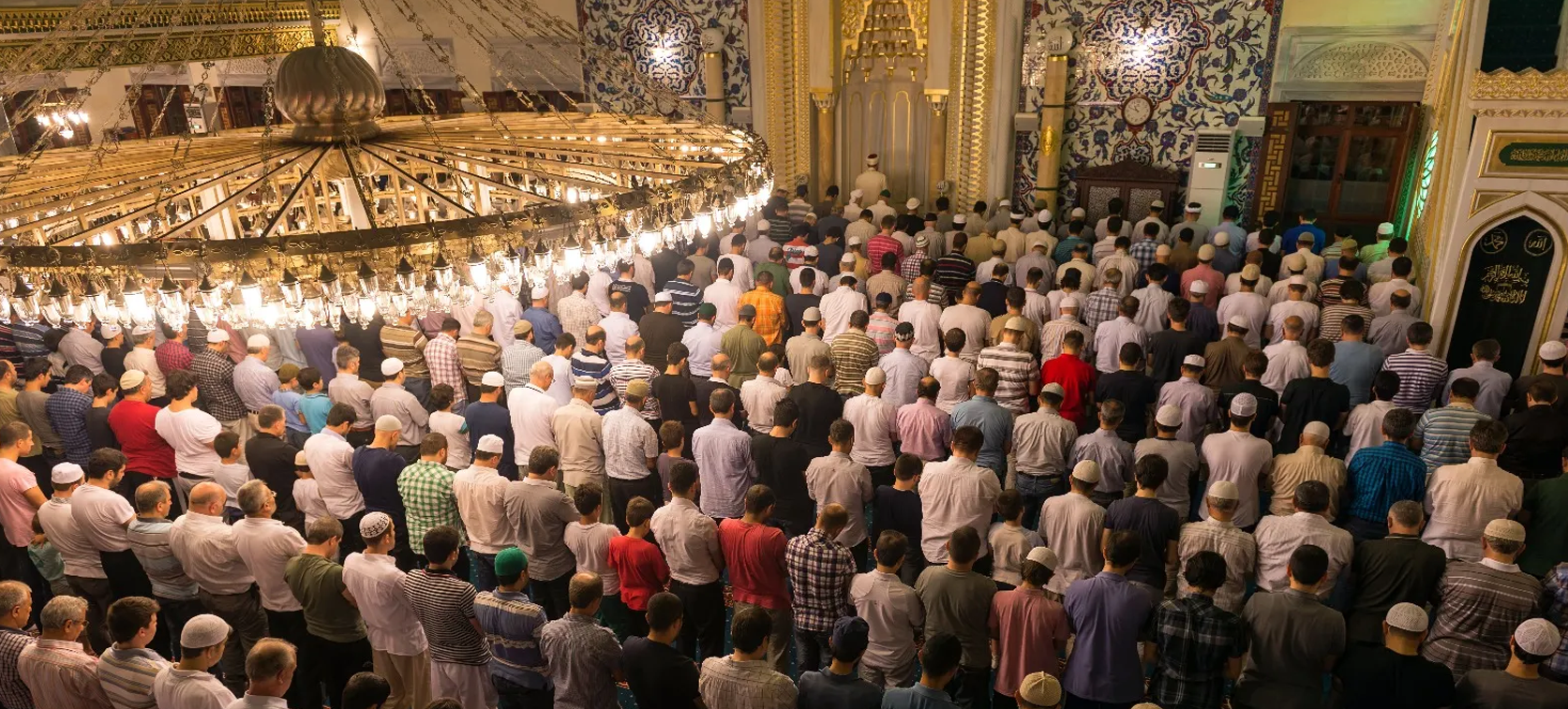
After a long day of fasting, nothing feels more soothing than standing shoulder to shoulder in Tarawih, listening to the melodious recitation of the Qur’an.
Across our communities, the experience is familiar.
- The hunger fades.
- The fatigue softens.
- The rhythm of the verses settles the heart.
We seek out masajid known for beautiful reciters. We discuss whose voice moves us most. We stand for eight or twenty rak‘at and leave feeling spiritually uplifted.
But a difficult question confronts us: Have we reduced Tarawih to spiritual atmosphere?
Because Tarawih is not a recital. It is a collective encounter with revelation.
Allah ﷻ did not reveal the Qur’an as sound alone. He revealed it as guidance — guidance meant to be reflected upon, internalised, and implemented.
أَفَلَا يَتَدَبَّرُونَ الْقُرْآنَ أَمْ عَلَىٰ قُلُوبٍ أَقْفَالُهَا
“Do they not reflect upon the Qur’an, or are there locks upon their hearts?” (47:24)
كِتَابٌ أَنْزَلْنَاهُ إِلَيْكَ مُبَارَكٌ لِّيَدَّبَّرُوا آيَاتِهِ وَلِيَتَذَكَّرَ أُولُو الْأَلْبَابِ
“A blessed Book We have revealed to you so that they may ponder over its verses and that people of understanding may take heed.” (38:29)
Tafakkar
Tadabbur.
These are not passive acts. They imply movement, recalibration, and change.
When we stand in Tarawih, we are not merely seeking tranquillity. We are standing as a Ummah while Allah addresses the condition of the world.
And what He SWT describes each night is strikingly relevant.
When the Qur’an Condemns Hoarding and Exploitation
كَيْ لَا يَكُونَ دُولَةً بَيْنَ الْأَغْنِيَاءِ مِنكُمْ
“So that it does not circulate only among the rich from among you.” (59:7)
Today, global inequality has reached staggering proportions. A small financial elite controls immense wealth while millions struggle with housing, food insecurity, and energy costs. Corporations announce record profits during cost-of-living crises. Developing nations are trapped in debt cycles that prioritise creditors over citizens.
The mechanisms have evolved — stock markets instead of caravans — but the moral pattern remains: accumulation without accountability.
When this verse is recited in Tarawih, are we connecting it to contemporary economic systems? Or have we confined it to history?
When the Qur’an Exposes the Arrogance of Rulers
إِنَّ فِرْعَوْنَ عَلَا فِي الْأَرْضِ
“Indeed, Fir‘awn exalted himself in the land…” (28:4)
Today we see similar patterns:
- Governments silencing critics in the name of security.
- International law applied selectively according to geopolitical interest.
- Policy shaped by corporate lobbying rather than public welfare.
- Civilian populations devastated while diplomatic language sanitises violence.
Power still protects itself. Narratives still justify domination.
When verses about Fir‘awn echo in Tarawih, they are not recounting an ancient story. They are exposing recurring structures of unaccountable authority.
When the Qur’an Defines Justice Between Men and Women
إِنَّ الْمُسْلِمِينَ وَالْمُسْلِمَاتِ… أَعَدَّ اللَّهُ لَهُم مَّغْفِرَةً وَأَجْرًا عَظِيمًا (33:35)
وَمِنْ آيَاتِهِ أَنْ خَلَقَ لَكُم مِّنْ أَنفُسِكُمْ أَزْوَاجًا لِّتَسْكُنُوا إِلَيْهَا وَجَعَلَ بَيْنَكُم مَّوَدَّةً وَرَحْمَةً (30:21)
This was not symbolic reform. It was societal recalibration.
Yet today, global discourse on gender is polarised.
On one side, cultural misogyny persists — inequality defended as tradition, abuse minimised, authority detached from accountability.
On the other side, strands of modern feminism shaped by secular liberal thought often define liberation through radical autonomy detached from divine guidance. Empowerment is framed primarily in economic or sexual terms. The family structure is sometimes treated as inherently oppressive. Moral boundaries are recast as restrictions to be dismantled.
The world oscillates between patriarchy and ideological individualism.
The Qur’an stands apart from both.
It does not sanctify domination. Nor does it dissolve moral structure in the name of freedom. It establishes justice rooted in taqwa — dignity without commodification, responsibility without oppression, difference without hierarchy.
When these verses are recited in Tarawih, they are speaking directly into a global crisis of gender politics. The question is whether the Ummah is prepared to advance the Qur’anic framework with clarity and confidence.
When the Qur’an Defends the Oppressed
وَمَا لَكُمْ لَا تُقَاتِلُونَ فِي سَبِيلِ اللَّهِ وَالْمُسْتَضْعَفِينَ مِنَ الرِّجَالِ وَالنِّسَاءِ وَالْوِلْدَانِ (4:75)
“What is wrong with you that you do not stand in the cause of Allah and for the oppressed among men, women, and children?”
Oppression today is visible and global.
- Occupied lands.
- Bombed cities.
- Refugee camps stretching across borders.
- Sanctions that starve populations.
- Ethnic cleansing denied in diplomatic language.
- Systemic poverty embedded within wealthy nations.
The Qur’an does not speak of the oppressed sentimentally. It assigns responsibility. When this verse is recited in Tarawih, do we feel collective obligation? Or do we reduce our response to emotion alone?
Tarawih as Collective Reckoning
If Tarawih is functioning properly, it should not merely soothe us. It should awaken us.
The melody may move the heart. But the meaning should press upon the conscience.
Each night in Ramadan, Allah ﷻ addresses:
- Economic inequality.
- Arrogant power.
- Moral corruption.
- Open Injustices.
- Collective responsibility.
Tarawih is not an escape from global chaos. It is a revelation addressing that chaos directly.
If we leave spiritually uplifted yet structurally passive, we have admired the sound while postponing responsibility.
The Qur’an was revealed to transform societies, not decorate them.
From Recitation to Transformation
Ramadan gathers us nightly behind an imam so that we may listen together. This collective listening should produce collective seriousness.
- It should spark intellectual renewal.
- It should inspire principled leadership.
- It should cultivate courage rooted in revelation.
Tarawih is not a performance. It is preparation.
- Preparation for a community that refuses to normalise injustice.
- Preparation for moral clarity in a world of confusion.
- Preparation for movement from what is to what should be.
If the Qur’an retains its rightful place — as a Book of tadabbur and tafakkur — then Tarawih becomes more than a spiritual high. It becomes a nightly rehearsal for change.
And perhaps that is why Ramadan was chosen as the month of revelation. Because a fasting body, a softened heart, and a gathered community are the perfect conditions not only for devotion, but for transformation
Need Help?
-
 [email protected]
-
 Follow us on Instagram
-
 Follow us on TikTok