


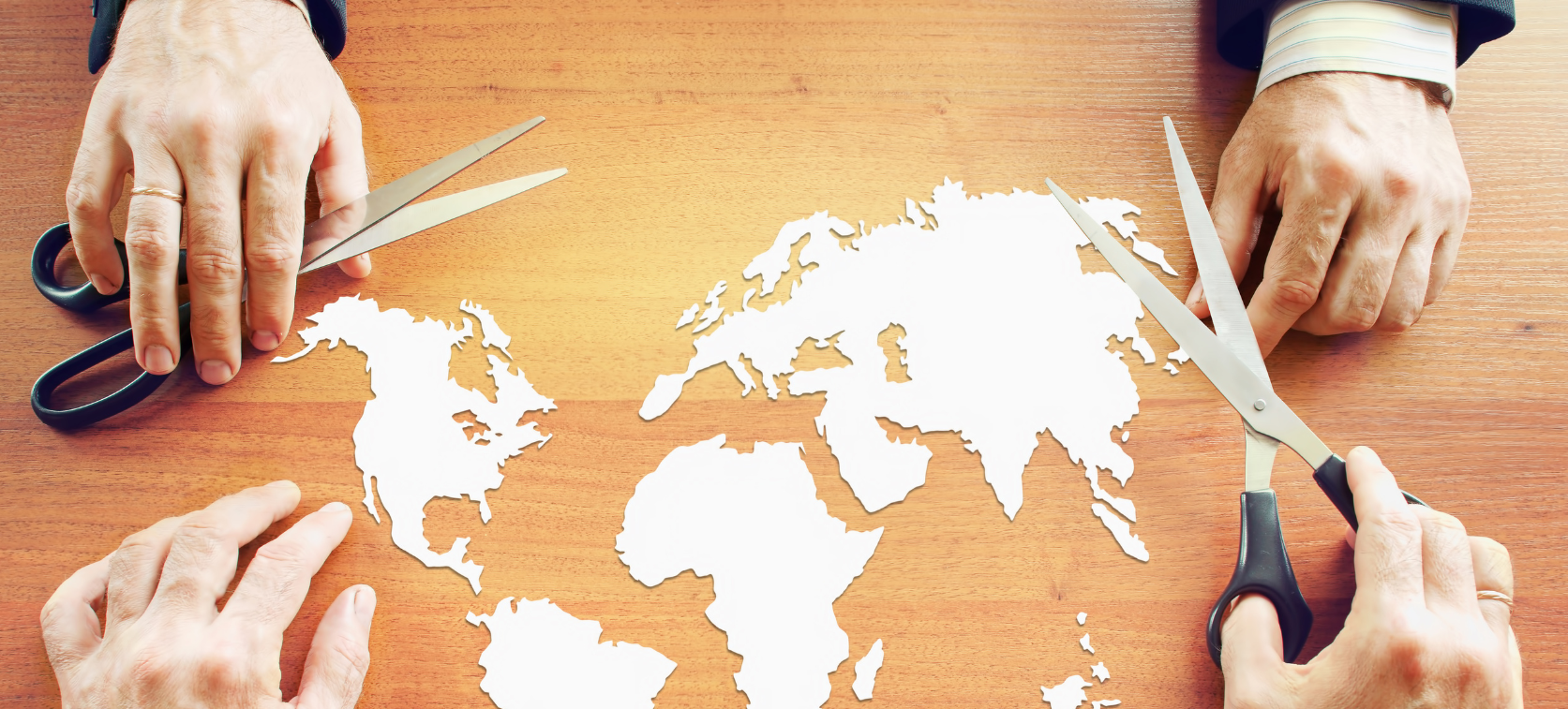
Many Muslims today live with a quiet, persistent frustration. We mobilise, vote, petition, protest, and speak—yet injustice remains structurally untouched. Gaza is destroyed in real time. Wars repeat under new justifications. Authoritarian regimes are rehabilitated. International law bends obediently before power. We are told this is a democratic world order, yet moral outrage rarely translates into meaningful change.
The problem is not Muslim apathy.
The problem is misdiagnosis.
The Qur’an never trained believers to analyse the world through flattering labels such as “democracy,” “international community,” or “rules-based order.” Instead, it gave us a vocabulary that exposes how power actually operates—across time, geography, and political systems. That vocabulary is not neutral. It is Qur’anic — and therefore unapologetically Islamic in its ideology. It does not seek approval from power, nor does it soften its judgement to remain respectable. It names authority by its behaviour, not by its slogans, and it trains believers to see the world as it is, not as it is marketed.
Makkah Was an Oligarchy, Not a Religious Society
The Prophet ﷺ did not confront a spiritually confused society in Makkah. He confronted an oligarchic city-state. Power rested in the hands of a small number of elite families who controlled trade, arbitration, public narrative, and political legitimacy. Religion existed, but largely as performance. The idols were not sacred because they were believed in; they were useful because they stabilised power.
Belief was tolerated.
Truth was not.
Islam became intolerable only when it stripped the elite of their moral authority. This political reality is not incidental to the Seerah—it governs it. And the Qur’an names this structure repeatedly through three interlocking terms: Al-Malāʾ, Al-Mustakbirūn, and al-Mutrafūn.
Al-Malāʾ — The Architects of Consensus
In the Qur’an, Al-Malāʾ refers to the visible elite who speak for society while remaining insulated from it. Every prophet encounters them first—not the masses—because they are the ones who define what is acceptable, realistic, and unthinkable.
In Makkah, the malāʾ were Quraysh’s ruling clans. They tolerated private belief but reacted aggressively to public recitation, because public truth undermined their legitimacy.
In the modern world, al-Malāʾ are found within state establishments and institutional ecosystems. In the United States, this includes the foreign-policy establishment spanning the Pentagon, State Department, National Security Council, major think tanks such as the Atlantic Council and Brookings Institution, and corporate media networks that set the boundaries of “serious debate.” In Britain, similar functions are carried out by Whitehall, the security services, and legacy media institutions that frame foreign policy as a technical matter beyond democratic interference.
This is why overwhelming public opposition to wars in Iraq and Afghanistan, or to unconditional support for Israel’s assault on Gaza, has little effect on policy. Elections may change governments, but elite consensus remains intact. The malāʾ rule by managing legitimacy, not by counting votes.
Al-Mustakbirūn — Power Above Accountability
If al-Malāʾ manage consensus, Al-Mustakbirūn enforce hierarchy. Istikbār in the Qur’an is not arrogance of personality; it is arrogance of position—the refusal to accept moral equality or legal accountability.
Firʿawn is condemned not merely for ruling, but for placing himself above law, scrutiny, and consequence.
The modern manifestation of istikbār is most visible in elite immunity. States that proclaim their commitment to international law violate it openly, yet face no consequence. Israel’s repeated breaches of humanitarian law—documented by the United Nations, Amnesty International, and Human Rights Watch—are met not with accountability, but with diplomatic protection and increased military aid. Meanwhile, weaker states face sanctions, isolation, or military intervention for far lesser violations.
Institutions such as the UN Security Council formalise this hierarchy. Permanent veto power is istikbār embedded into global governance: some lives are protected by law, others are negotiable. Equality is demanded downward. Exemption is preserved upward.
This is not hypocrisy by accident.
It is hierarchy by design.
Al-Mutrafūn — Comfort That Normalises Injustice
Perhaps the Qur’an’s most unsettling category is al-Mutrafūn—those softened by wealth, luxury, and insulation from consequence. The Qur’an teaches that when societies collapse, they do not collapse from the margins inward. They rot from the top down.
In the modern world, al-Mutrafūn are found in corporate and financial power. Arms manufacturers such as Lockheed Martin, Raytheon, and BAE Systems profit directly from perpetual war. Financial institutions and investment funds stabilise conflict as economic necessity. Media conglomerates dependent on advertising revenue and political access reproduce official narratives because disruption threatens profit.
For the mutrafūn, Gaza is not a moral catastrophe; it is a geopolitical problem. Sanctions are not collective punishment; they are policy tools. Civilian deaths are not crimes; they are unfortunate but necessary outcomes. Comfort dulls conscience, and distance erases responsibility.
This is why mass death can be livestreamed without structural change. Those who decide do not bear the cost.
One Structure, Repeated Across History
These three Qur’anic categories do not operate independently. Together, they form a single architecture of power. The malāʾ define legitimacy and narrative. The mustakbirūn enforce hierarchy and immunity. The mutrafūn finance and normalise injustice, presenting it as unavoidable.
This was Quraysh.
This is the US-led global order.
Different language.
Same structure.
The Prophetic Strategy We Forgot
One of the most damaging assumptions in modern Muslim political engagement is the belief that moral pressure automatically leads to policy change. The Seerah never operated on that illusion.
The Prophet ﷺ did not seek validation from the malāʾ, negotiate morality with the mustakbirūn, or reassure the mutrafūn. He dismantled elite political authority, built a parallel political consciousness, accepted marginalisation, and spoke truth without calculating numbers.
He understood something we have forgotten: systems built on elite immunity do not reform themselves—they collapse when their legitimacy erodes.
Recovering Qur’anic Vision
The Qur’an does not oppose civilisation, non-Muslims, or even geographic locations like the West. It opposes elite immunity, wherever it exists. It trains believers to recognise power not by what it claims to be, but by how it behaves.
Muslims today do not lack emotion, sincerity, or sacrifice.
They lack clarity.
When clarity returns, confidence follows. And when confidence returns, Muslims stop begging unjust systems for dignity and begin rebuilding moral authority—just as the Prophet ﷺ did in Makkah.
The Qur’an has already named the disease.
The Seerah has already shown the cure.
What remains is the courage to see the world as Allah taught us to see it.
Need Help?
-
 [email protected]
-
 Follow us on Instagram
-
 Follow us on TikTok