

Making sense of Abdul Rahman Mohamed El-Sayed

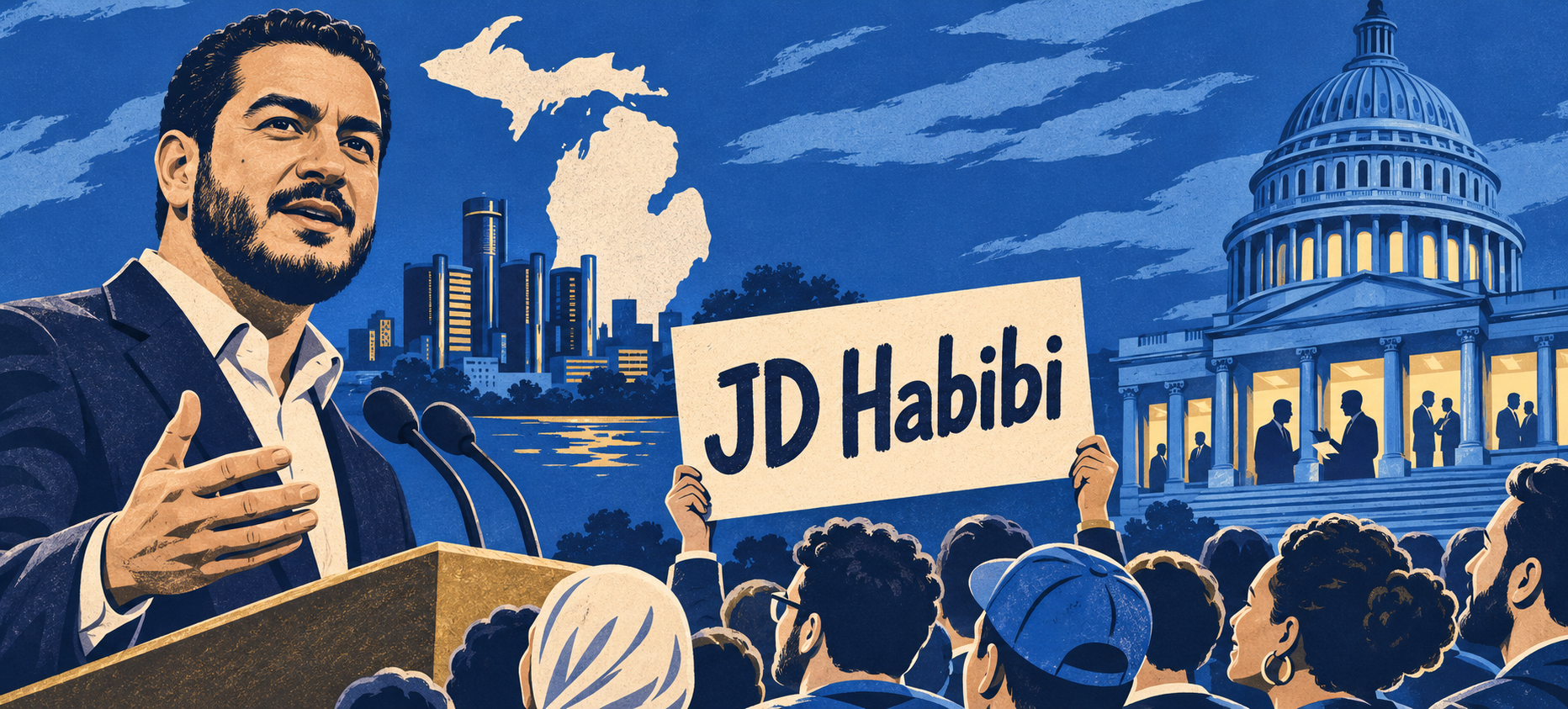
America’s midterms swept Republicans out of control of both chambers of Congress. In Michigan, Abdul El-Sayed won a Senate seat after a campaign in which his opponents tried to make his Muslim faith an electoral liability. For Democrats, it was a night to celebrate. For voters who wanted a change in how America is governed, it was the beginning of a harder test.
To make sense of the blue wave that washed over the Republicans, three things need to be understood separately. The masses explain why the ground shifted. El-Sayed shows how a politician can turn that discontent into electoral support. The system determines how much of that support can be translated into law.
The masses
The starting point is the household budget. Nearly nine in ten voters told the AP Voter Poll that the cost of living was a major or crucial factor in their decision. About six in ten of those voters backed Democratic candidates for the House. Around seven in ten thought the economy favoured the wealthy. Voters had a judgement about how the economy was working and whom it was working for. The Democrats gave them a way to act on it.
El-Sayed
A party can benefit from public anger. A candidate still has to give people a reason to vote for him. Mr El-Sayed connected what working families pay for healthcare with who profits from the way it is financed. Medicare for All gave voters a concrete idea of what he would do about it.
The art of politics, wherever it is practised, is knowing what people want to hear. Often they want somebody in public life to say plainly what they have been saying at home for years. Andy Burnham did much the same in Britain when he spoke about housing, electricity bills and the rewards enjoyed by water-company shareholders. The subjects were familiar because people were already living with the consequences. Read Burnham’s conference speech.
Mr El-Sayed’s opponents tried to make the election turn on his faith. Mike Rogers endorsed a social-media post calling him a terrorist. Donald Trump invoked the September 11 attacks. His election as America’s first Muslim senator is a milestone. To understand why he won, look at the concerns he addressed as closely as the suspicions his opponents tried to stir. Reuters’ reporting on the campaign.
The system
This is where an election can become a smokescreen. The change in officeholders is real. It can also give voters the impression that they have acquired the power to decide whose interests government serves. In a liberal democracy such as America’s, wealthy donors, corporations and trade associations have the money to shape which campaigns are viable, which proposals get a hearing and which provisions survive the lobbying that follows. Their influence operates before a candidate is elected and continues long after the votes are counted.
This is what buying influence over legislation looks like in practice. American rules allow Super PACs to accept unlimited contributions for independent political spending. In Michigan, a tracker using federal filings put outside spending against Mr El-Sayed at more than $130m in the general election. He beat it. The result shows voters can overcome a spending advantage at the ballot box. The scale of that spending shows what organised wealth can mobilise against a single candidate. Federal Election Commission rules and Michigan Senate spending figures.
The influence extends to policy itself. In a study of 1,779 US policy proposals from an earlier period, Martin Gilens and Benjamin Page found that economic elites and organised business interests had substantial independent influence over outcomes. Ordinary citizens’ preferences carried little independent weight in their model. Elections give the public a chance to dismiss its representatives. Wealth gives a much smaller group the means to press its interests throughout the making of a law. Read the Gilens and Page study.
Islam sets a different standard for the exercise of power. Aisha relates that when a woman from the prominent Banu Makhzum clan committed theft, members of Quraysh asked Usamah ibn Zayd, who was dear to the Prophet Muhammad ﷺ, to intercede for her. The Prophet refused. He warned that earlier peoples had brought ruin upon themselves by excusing the noble when they stole and punishing the weak for the same offence. He then said that if his own daughter Fatimah were to steal, he would apply the same prescribed penalty to her. Sahih al-Bukhari 3475.
Quraysh had found someone with personal access to the Prophet. That access secured them no exemption. The Islamic principle is that the ruler is bound by the same law he applies to everyone else. Wealth, lineage and proximity to power give no one a claim to special treatment. A system in which the powerful can buy exceptions for themselves asks the weak to live under rules the rich can escape.
That principle brings us back to El-Sayed. In the case of Banu Makhzum, influential people sought an exception once the law had to be applied. In Washington, wealthy interests can intervene earlier, while the law is still being written. That is the obstacle El-Sayed faces on Medicare for All. Connecting with people is the ace card. Delivering takes more than “JD Habibi”. The families who struggle to pay for healthcare gave him one Senate seat. The industry that profits from the current arrangements can spend years pressing its case across both chambers of Congress. He won Michigan by giving those families a voice. He will not be able to deliver the healthcare overhaul he ran on.


