


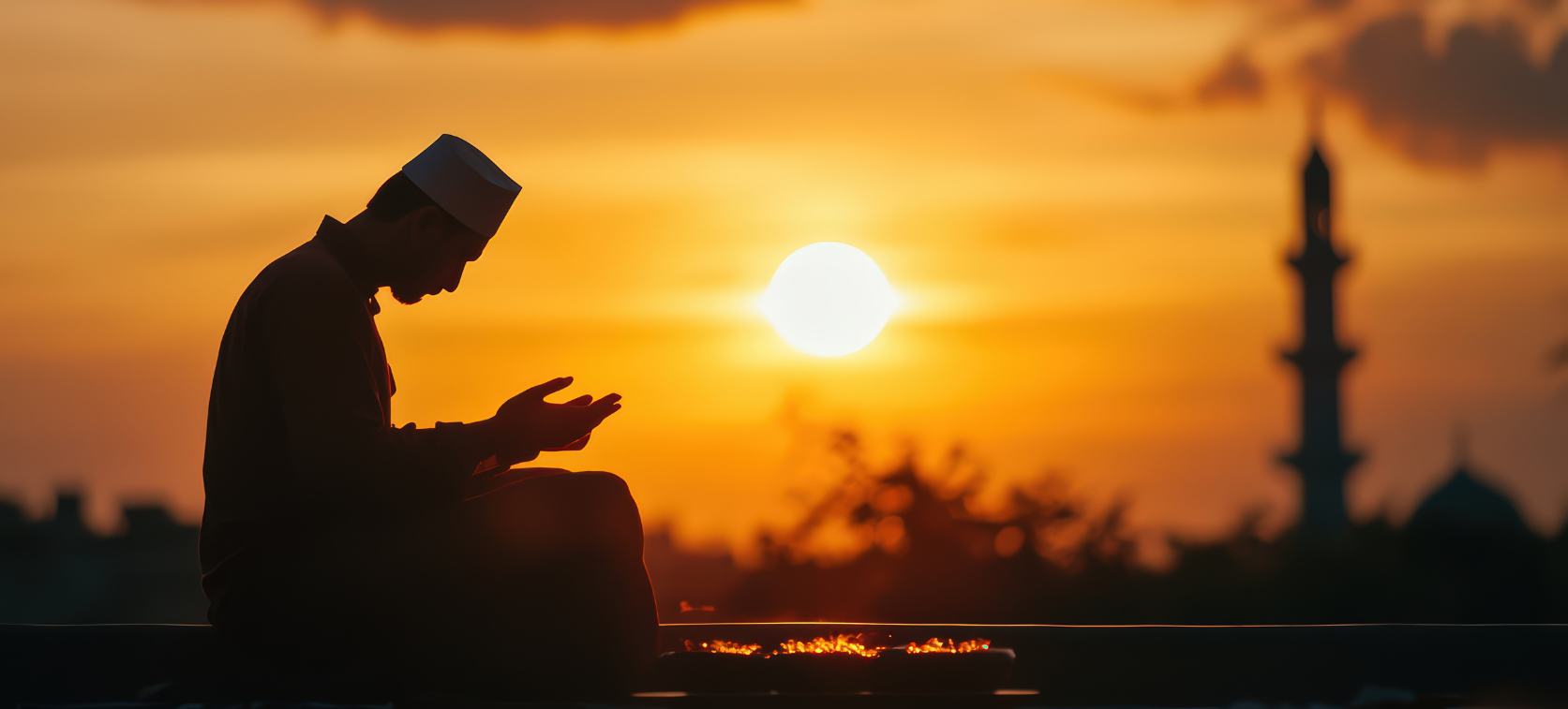
Ramadan has arrived again.
Mosques are filling. Qur’ans are reopening. We are setting personal goals: finish the whole Quran, improve our recitation, control our anger, purify our intentions.
All of this is good. Necessary, even.
But there is a question we need to ask ourselves — especially those of us who shape community conversations:
Have we turned Ramadan into a private journey, while forgetting that Islam teaches us to move as a community?
In every rakʿah of every ṣalāh, we say:
Ihdinā ṣ-ṣirāṭ al-mustaqīm —
Guide us to the Straight Path.
These words come from Surah Al-Fatihah.
Not “guide me.”
Guide us.
Even when praying alone at night, we speak in the plural.
Islam does not train isolated believers. It builds an Ummah.
The Meaning of “Us”
That small word — us — carries weight.
It reminds us that:
- My guidance is tied to yours.
- My silence affects you.
- My courage strengthens you.
- My fear weakens the whole body.
Ramadan is not just about personal improvement. It is about collective direction.
Yet we live in a time where religion is welcomed when it is quiet and charitable — but resisted when it challenges power.
So Ramadan risks becoming “safe.”
We host ifṭārs.
We fundraise.
We increase worship.
But when public debates arise about:
- The silencing of voices for the liberation of Palestine,
- The targeting of Muslim institutions,
- The attacks on Islam and Muslims,
- Or the framing of Muslim identity in public policy,
many become cautious.
Boards hesitate.
Leaders soften statements.
Influential voices withdraw.
This is not always weakness. Sometimes it is fear of consequences. Sometimes it is institutional survival.
But Ramadan forces a deeper question:
Who do we ultimately fear?
Public backlash — or divine accountability?
Ramadan Is Not an Escape
The Qur’an was not revealed into comfort. It was revealed into a society structured by power, persecution, and injustice.
Its first generation did not treat revelation as personal therapy. It shaped how they spoke, how they organised, and how they stood.
Fasting disciplines desire.
Prayer disciplines ego.
Recitation disciplines thought.
But discipline toward what?
If Ramadan produces spiritually refined individuals who avoid political responsibility, then we have narrowed its scope.
In many Western contexts, speaking clearly about Palestine, foreign policy, unjust legislation, or systemic attacks on Muslims can carry professional and institutional consequences.
Academics risk funding.
Charities risk scrutiny.
Community leaders risk reputational attack.
These pressures are real.
But Ramadan is the month that recalibrates fear.
The Risk of Devotional Isolation
Under sustained pressure, minority communities often turn inward.
We increase charity drives.
We expand welfare services.
We perfect internal programming.
All of this is praiseworthy.
But if the Ummah appears only in an emotional witr duʿā’ — while our institutional voice remains muted — then we are not living the full meaning of Ihdinā.
When we ask Allah to guide us, we are invoking collective responsibility.
Guidance requires alignment.
Alignment requires clarity.
Clarity sometimes requires risk.
For Those With Influence
For scholars, writers, organisers, trustees, business leaders, and public voices — Ramadan should sharpen clarity, not soften it.
Taqwā means remembering that Allah sees beyond reputations and beyond political climates.
Ramadan should revive:
- Collective thinking.
- Political courage.
- Unity with purpose.
- Strategic wisdom without surrendering truth.
Political courage does not mean recklessness.
It does not mean uncontrolled anger.
It means refusing to internalise intimidation.
It means that when unjust narratives dominate, we do not echo them to remain acceptable.
It means that when Muslim causes are misrepresented, we do not distance ourselves to protect status.
It means that our institutions are guided by principle before comfort.
Beyond Emotional Nights
It is easy to weep for the Ummah in the final rakʿah of tarāwīḥ.
It is harder to review our policies, partnerships, funding models, and public messaging and ask:
Are we aligned with the “us” we invoke in prayer?
This Ramadan, we must ask:
Are we perfecting our recitation while censoring our conscience?
Are we lengthening our sujūd while shortening our resolve?
Are we asking Allah to guide us, while structuring our lives around self-preservation?
Ramadan is not only about self-improvement.
It is about reorientation.
A Clear Responsibility This Ramadan
If we truly mean “Guide us,” then we must move beyond symbolism.
Muslims must seek to understand the real solutions being discussed across the Ummah globally — political, economic, intellectual, and strategic.
We must educate ourselves beyond headlines.
We must engage in discourse that is real.
We must think beyond charity and reform, and move towards a comprehensive systemic change.
And then we must become strong advocates for principled solutions — not passive observers of Muslim suffering.
Ramadan should produce believers who are spiritually refined and politically conscious.
The Qur’an did not teach us to say “guide me.”
It taught us to say:
“Guide us.”
And that “us” demands awareness, political courage, unity — and action.
Need Help?
-
 [email protected]
-
 Follow us on Instagram
-
 Follow us on TikTok